
What to Know Before Building a Cabin on Your Property in New Zealand

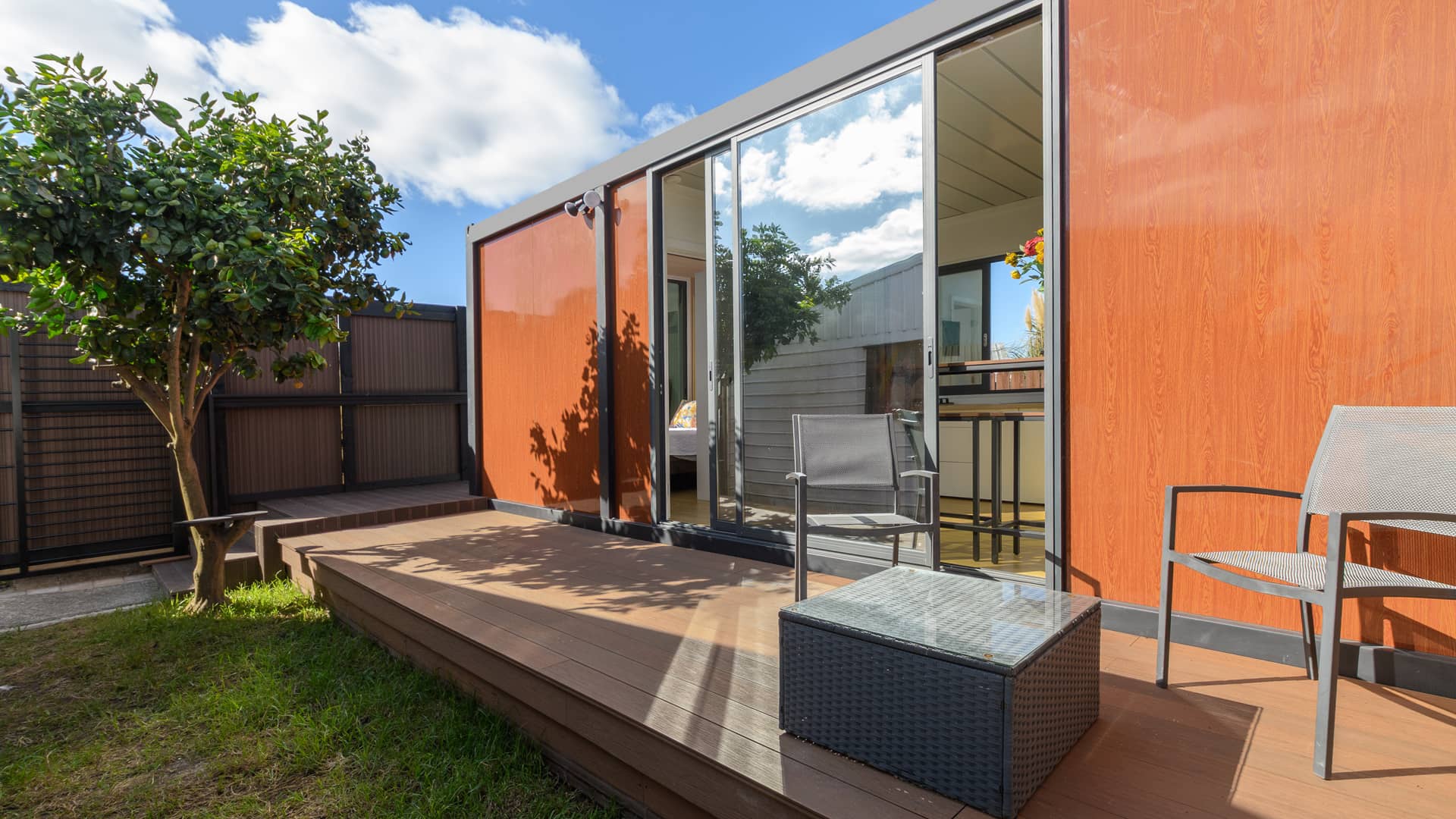
Building a cabin on your property can be a practical way to add extra space without committing to a full new home build. We design and build affordable tiny homes and transportable cabins for uses such as home offices, guest accommodation, rental investments, and compact everyday living.
We build each cabin on-site at your property and deliver nationwide across New Zealand, which makes our model relevant for a wide range of sections and access conditions.
Start with the purpose of the cabin
Before looking at sizes or finishes, define exactly what the cabin needs to do. Our customers most commonly use cabins as:
- A home office separate from the main house
- Guest accommodation for family or visitors
- A rental investment or extra income stream
- A compact tiny home for personal living
That purpose affects the right layout, the amount of privacy needed, whether a bathroom or kitchenette is essential, and how much storage should be included. A simple sleepout or office can suit an open-plan format, while longer-term accommodation often needs clearer separation between living, sleeping, and service areas.
Understand how the build process works
One of the main differences with our cabins is that they are constructed on-site rather than delivered as one complete unit. Our build process includes:
- Site preparation and demolition
- Footings installed to suit site conditions
- Steel subfloor system
- Structural frame and insulated wall system
- Interior wall lining
- Roof structure and weatherproofing
- Roof insulation and flooring build-up
- Kitchenette and bathroom fit-out
- Exterior finishes and decking
This gives you a clearer idea of what will happen on your property during the build. Our cabins are delivered in prefabricated parts and assembled on-site by our team, which can be useful where access is limited or where a finished cabin would be harder to place in one piece.
Assess your site conditions early
Site conditions can have a big effect on the overall project. We install proper footings to suit the site conditions and layout, so it is worth checking access, available space, slope, drainage, and ground stability early.
A useful site checklist includes:
- Access for materials and builders
- Flat or workable ground
- Drainage and water runoff
- Available room for the cabin footprint
- Space around the cabin for privacy, decking, or movement
This matters even more for back sections, tight suburban sites, or rural properties where vehicle access may be more complicated. A realistic view of the site early on makes it easier to choose a suitable cabin model and avoid unnecessary surprises later.
Check consent requirements before you commit
Consent is one of the first issues most buyers think about. Generally, building consent is not required for transportable cabins under 10 square metres or for cabins classified like caravans used for temporary accommodation. However, local council rules vary, and resource consent may still be required depending on the location and how the cabin will be used.
Before committing, it is sensible to check:
- The size of the cabin you want
- Whether the intended use is temporary or long-term
- Local council rules for your area
- Whether resource consent may apply
There is no one-size-fits-all answer. The safest approach is to confirm the intended use of the cabin, talk to your local council if needed, and get clarity before settling on the final design and placement.
Choose a layout that matches real-life use
Our cabin range shows how layout choices change depending on the intended use. The 6 x 3 open-plan cabin is a flexible and affordable option, while the 7 x 3 model includes a separate bedroom, kitchenette, and storage or bathroom area, and the 9 x 3 model adds a separate bedroom, lounge or kitchen space, and a deluxe bathroom for more premium living.
Our cabin options include:
- 6 x 3 Open Plan Cabin for flexible multi-purpose use
- 7 x 3 Luxury Cabin with separate bedroom and service areas
- 9 x 3 Premium Luxury Cabin for a more complete living setup
This is where practical planning matters. A cabin should not just fit on the site; it should also support how the space will actually be used every day, whether that means working from home, hosting guests, or creating a liveable small dwelling.
Look beyond price to quality and comfort
Cost matters, but the cheapest option is not always the best long-term choice. Our cabins include features such as insulated composite wall panels, acoustic-rated internal lining, roof insulation, durable flooring, moisture-resistant bathroom finishes, and materials selected for New Zealand’s coastal and cold-weather conditions.
Quality features we use include:
- Insulated wall systems
- Acoustic-rated wall lining
- Roof insulation
- Durable SPC wood-grain flooring
- Moisture-resistant bathroom wall panels
- Materials suited to New Zealand weather conditions
These details directly affect comfort, warmth, maintenance, and overall durability. When comparing options, it is worth paying close attention to what is included in the construction system rather than focusing only on the advertised starting price.
Review what is included in the quote
We keep our process simple with no hidden costs and no surprise fees. We explain everything clearly and offer fair pricing, which makes quote transparency a key part of the decision-making process.
When reviewing a quote, make sure to check:
- What is included as standard
- What counts as an optional extra
- Whether plumbing connections are included or separate
- What design or layout customisations are available
- Estimated timing for delivery and installation
Getting these points confirmed early can make the project easier to manage and budget for. Clear expectations at the quoting stage usually lead to a smoother build process overall.
Plan the project with a clear checklist
A cabin project usually runs more smoothly when the basics are covered early. That means being clear on the purpose of the cabin, checking the site conditions, understanding likely consent requirements, choosing the right layout, and confirming what is included in the quote.
A simple planning checklist could include:
- Decide how the cabin will be used
- Assess the site and access
- Check local consent requirements
- Compare cabin layouts and sizes
- Review inclusions and optional extras
- Request a clear quote
For New Zealand homeowners looking for extra space, a work-from-home setup, guest accommodation, or a compact living option, that groundwork can make a major difference.
FAQ
Do I need building consent for a cabin in New Zealand?
Generally, building consent is not required for transportable cabins under 10 square metres or for cabins classified like caravans used for temporary accommodation. However, local council rules vary, and resource consent may still be required depending on the site and intended use.
Are the cabins delivered fully built?
No. Our cabins are delivered in prefabricated parts and assembled on-site by our team, which can help with transport and site access.
What can a cabin be used for?
We promote our cabins for several uses, including home offices, guest accommodation, rental investments, and personal tiny homes.
Are these cabins suitable for New Zealand weather?
Yes. Our cabins are designed for New Zealand conditions and use materials intended to handle coastal environments, mountain frost, and varied climates across the country.
What cabin sizes are available?
We offer several cabin options, including a 6 x 3 open-plan cabin, a 7 x 3 luxury cabin, and a 9 x 3 premium luxury cabin, with different layouts depending on how the space will be used.
Does the company offer nationwide service?
Yes. We deliver, install, and service cabins throughout New Zealand.