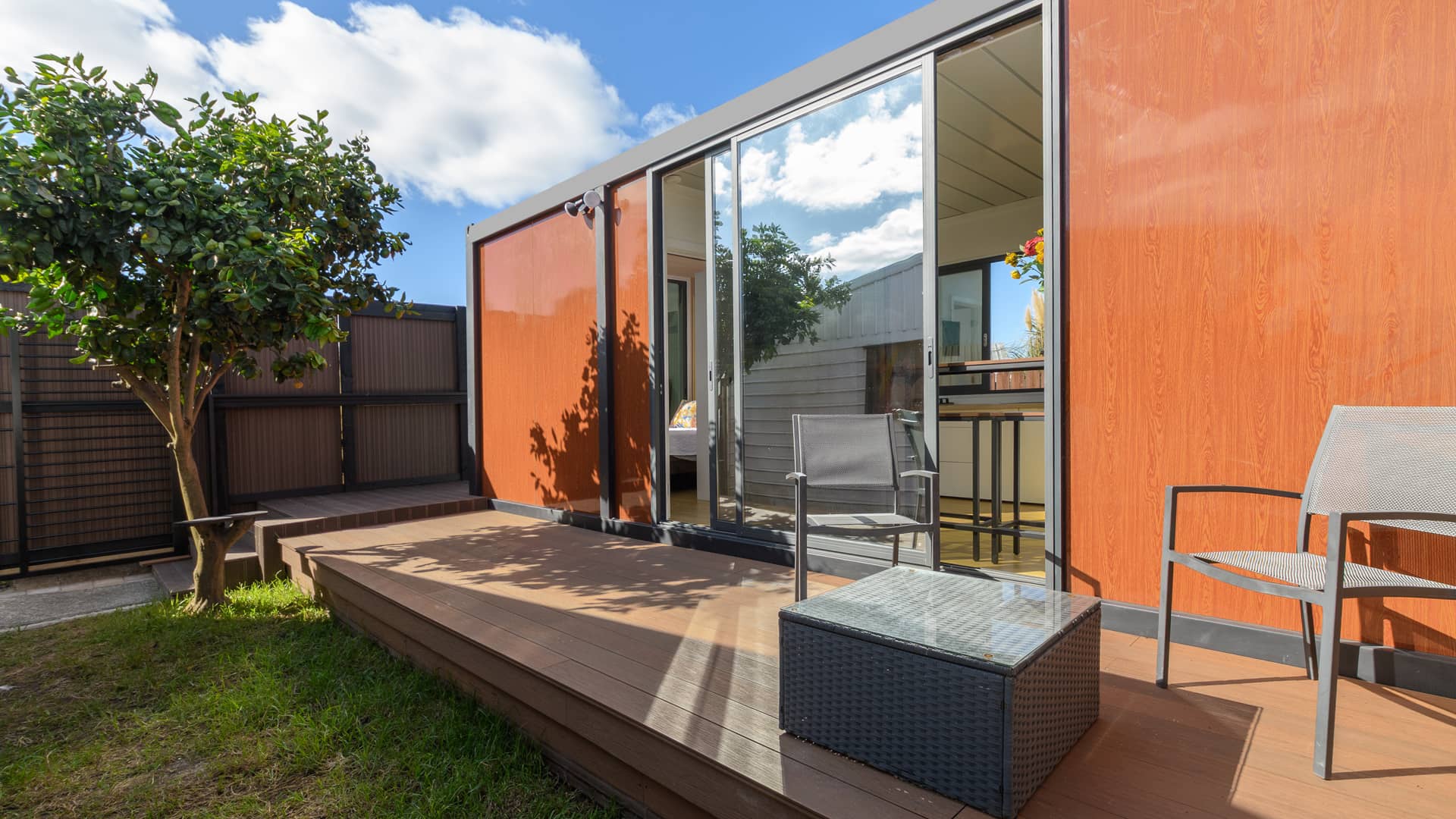


Cabin vs Tiny Home vs Minor Dwelling - What's the Difference?

If you are researching extra space for your property, you will probably come across the terms cabin, tiny home, and minor dwelling used almost interchangeably. Even so, they do not always mean exactly the same thing in practice. Understanding the difference can help you choose the right option for your budget, intended use, property layout, and council requirements.
What a cabin usually means
A cabin is generally the broadest of the three terms. We present our cabins as flexible, transportable spaces that can be used as home offices, guest rooms, rental spaces, or compact living solutions.
In this context, a cabin often refers to a smaller standalone structure designed for practical use and efficient living. Our cabin range includes models such as the 6 x 3 open-plan cabin, the 7 x 3 luxury cabin, and the 9 x 3 premium luxury cabin, showing that a cabin can range from a simple extra room to a more fully equipped space.
Typical cabin features include:
- Compact footprint
- Flexible use cases
- Transportable design
- On-site assembly
- Optional living features such as a kitchenette or bathroom
What a tiny home usually means
A tiny home usually suggests a more complete living environment rather than just an extra room. We use the term affordable tiny homes to describe cabins that support everyday living with practical design, quality materials, and efficient use of space.
A tiny home in our range is designed to function more like a compact house. That could include separate sleeping areas, a kitchenette, bathroom facilities, insulation, and finishes suited to long-term comfort in New Zealand conditions.
Tiny homes are often associated with:
- Full or near-full time living
- Greater self-containment
- More emphasis on comfort and layout
- Efficient use of every square metre
- A house-like feel in a smaller footprint
What a minor dwelling usually means
A minor dwelling usually refers more to how a structure is used on a property than how it looks. Our minor dwelling options are practical small homes that can support family living, rental use, or independent accommodation on an existing section.
In many cases, a minor dwelling implies a secondary residential space connected to the rules and regulations that apply to the property. Our cabins are designed to create a comfortable, self-contained home for extended family, a guest suite, or accommodation for tenants.
A minor dwelling often involves:
- Placement on a property that already has a main home
- Independent or semi-independent living
- Use by family members, guests, or tenants
- Greater attention to compliance and local regulations
- A layout that supports day-to-day living
Where the terms overlap
This is where things get a little blurry. A cabin can also be a tiny home, and a tiny home can also function as a minor dwelling, depending on how it is designed and how it is used.
For example, our 7 x 3 and 9 x 3 options include layouts with separate bedrooms, kitchen areas, and bathroom zones, which means they can move beyond being a simple cabin and into tiny home or minor dwelling territory depending on the property setup. That overlap is why buyers should focus less on the label and more on the purpose, layout, and regulatory fit.
How to choose the right option
The best choice depends on what you actually need from the space. If you want an extra room for work, hobbies, or occasional guests, a cabin may be the most straightforward fit.
If you want a more complete compact living setup, a tiny home may be the better description. If the goal is to add a second living space on a property for family, tenants, or independent accommodation, then the minor dwelling angle becomes more relevant, especially when thinking about council rules and site planning.
A useful way to decide is to ask:
- Will someone live in it full time or only occasionally?
- Does it need a bathroom and kitchenette?
- Is it mainly extra space or a standalone living area?
- Will it sit on a property with an existing home?
- Do local regulations affect what it can be used for?
Why the build method matters too
We build our cabins on-site using prefabricated parts delivered to the property, then assembled by our team. That approach matters because the use of the building may change how important access, site preparation, footings, services, and final fit-out become.
A simple office cabin may have fewer requirements than a more liveable tiny home or minor dwelling. The more self-contained the space needs to be, the more important it becomes to think through layout, plumbing, privacy, insulation, and long-term comfort.
Focus on use, not just labels
The most helpful way to think about these terms is that they describe overlapping ideas rather than rigid categories. Our cabins, tiny homes, and minor dwellings all point toward compact, practical spaces designed for New Zealand properties and different ways of living.
Instead of getting stuck on terminology, it is usually better to define the purpose first, then choose the layout, features, and compliance path that match that use. That approach makes it much easier to work out whether you need a simple cabin, a liveable tiny home, or a minor dwelling that functions as a second home on your property.
FAQ
Is a cabin the same as a tiny home?
Not always. A cabin is a broad term for a compact, transportable structure, while a tiny home usually suggests a more complete living setup with features that support everyday use.
What makes a minor dwelling different?
A minor dwelling is usually defined more by how it is used on a property. It often refers to a secondary living space on land that already has a main home, such as accommodation for family members, guests, or tenants.
Can one building be called all three?
Yes. A single structure can be described as a cabin, tiny home, and minor dwelling depending on its design, features, and intended use.
Which option is best for a home office?
A cabin is often the simplest fit for a home office because it can provide practical extra space without needing the full features of a self-contained living area.
Which option is best for family or rental accommodation?
A tiny home or minor dwelling is usually more suitable if the space needs to support everyday living, privacy, and self-contained use for family members or tenants.
Does the name affect consent requirements?
It can. Local council rules vary, and consent requirements may depend on size, location, and intended use, so it is important to confirm how the structure will be used before moving ahead.